


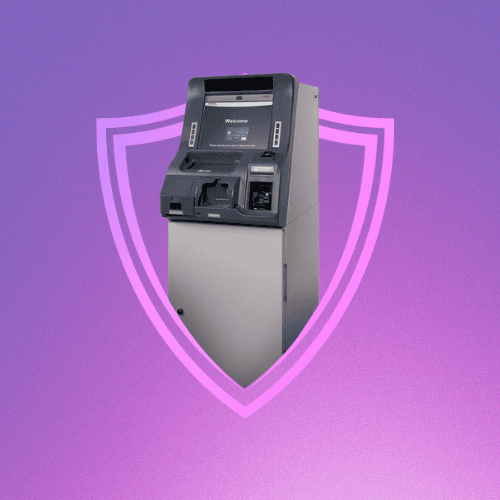
Terminal/ATM security now anchors the trust and reliability of banking, as self-service terminals—ATMs, cash recyclers, and kiosks — become ubiquitous customer touchpoints. Modern threats and operational realities mean banks must see terminal security not as a technical afterthought but as a strategic, always-on shield shaping both risk posture and customer confidence.
Banking at the Edge
Every city or small town shows it: people queue, tap, deposit, and transact at unattended terminals, with these machines becoming the “extended branches” of every bank. Customers expect 24×7 convenience, but these endpoints are exposed to physical tampering, intermittent network outages, and ever-evolving cyberattacks. Attackers now target the least-defended “edge” devices, such as outdated terminals and unpatched systems, often exploiting minor vulnerabilities to launch much larger attacks—turning a single compromised ATM into a conduit for malware, ransomware, or data theft.
Security Challenges in Self-Service Terminals
Banks straddle the tension between legacy infrastructure and emerging risks:
- Outdated software and hardware: Many terminals still run legacy operating systems and heterogeneous hardware, making unified, timely patching difficult.
- Complex, multi-dimensional threats: Modern malware, privilege escalations, code injection, and ransomware require new forms of defense, not just antivirus.
- Fragmented security coverage: Using different vendors for antivirus, encryption, and monitoring leads to siloed visibility and operational challenges.
- Low-connectivity and rural deployment: Traditional security tools reliant on continuous internet connectivity don’t work well for devices in remote areas that may be offline for hours or days.
- Regulatory pressure: Compliance with RBI guidelines and global standards (PCI DSS, ISO 27001) mandates stronger endpoint security, audit trails, and encryption—or else exposes banks to penalties and reputational risk.
- Cost-uptime-security balancing: Each security layer must be nearly invisible to customers and operationally manageable, without slowing down transactions or requiring large-scale asset upgrades.
How Terminal Security Solutions (TSS) Help?
Purpose-built frameworks like Hitachi Payment Services’ Terminal Security Solutions (TSS) transform terminal security from a patchwork of add-ons to an integrated, defense-in-depth program. TSS is engineered to:
- Block threats in real time: Proactively monitors and prevents malware, unauthorized changes, and suspicious behaviors before customer service is affected.
- Secure every system layer: Protects files, applications, and data, with strict control over executable code, shrinking the attack surface.
- Operate autonomously: Applies security policies and encrypts data even when terminals are offline.
- Remain “invisible” to users: Ensures robust protection without interrupting customer transactions or terminal performance.
Business and Operational Benefits
TSS yields multiple advantages beyond threat blocking:
- Always-on encryption and access control (AES-256 grade) safeguard all data—even if devices are stolen.
- Broad, intelligent detection shields against everything from viruses to code injection and privilege abuse.
- Compatibility with legacy systems allows banks to modernize security without forced hardware upgrades.
- Centralized platform offers a single dashboard for monitoring, policymaking, and compliance.
- High resilience: Tier-3 primary and disaster recovery data centers ensure ongoing service, with continuous security operations center coverage.
- Lower total costs: Integrating multiple security functionalities in one framework drives down operational expenses, fraud losses, and downtime.
Hitachi Payment Services’ TSS Unique Position
Hitachi Payment Services’ Terminal Security Solutions stand apart for several reasons:
- Domain expertise: Developed by experts in ATM, payment, and Cash Recycling Machine (CRM) infrastructure — security controls fit real-world ATM operations.
- Compliance ready: Built to align with RBI, PCI DSS, and ISO 27001, simplifying audits and reducing regulatory workload.
- Optimized for India: Local design ensures resilience in low-connectivity, diverse-hardware, and high-volume settings typical of Indian banking.
- Robust managed infrastructure: High-availability data centers and 24×7 support provide operational assurance atop core security functions.
Customer Experience and Trust
Deploying TSS translates directly into better customer outcomes:
- Safer, more reliable transactions: Reduced fraud, fewer service interruptions, and less customer anxiety.
- Higher uptime: Fewer “Out of Service” screens and more predictable access to funds and deposits.
- Stronger data protection: Minimizes the risk of PIN and transaction data compromise.
- Rapid resolution: Centralized alerts and oversight enable faster bank interventions if terminal anomalies arise.
- Builds digital trust: Secure, seamless terminal experiences encourage wider use of all digital channels and greater customer engagement with modern banking services.
When banks secure their terminals, they are ultimately investing in more than compliance—they’re protecting their brand, their banking ecosystem, and the confidence of every customer who relies on self-service every day.